The Squid Silhouette Embroidery Review
As a designer who spends more time than I care to admit staring at stitch density charts and testing fabric stability, I have developed a certain skepticism toward minimalist designs. Often, "simple" translates to "boring" or, worse, "difficult to execute cleanly." However, when I pulled The Squid Silhouette into my digitizing software this week, my perspective shifted. This isn't just another clip-art shape; it is a study in negative space and confident line work that demands respect from the embroiderer.
I evaluated this design with a specific commercial application in mind: a boutique line of ocean-themed apparel and home goods. My goal was to determine if this machine embroidery design could stand alone as a statement piece on custom apparel without feeling underworked or cheap. Here is my practical assessment of how The Squid Silhouette performs in real-world production scenarios.
First Impressions and Visual Personality
The moment you load the file, the strength of The Squid Silhouette becomes apparent. It belongs firmly in the Animals category but transcends typical wildlife imagery through its abstract elegance. The design relies on clean, uninterrupted curves that mimic the graceful undulation of a squid’s tentacles. There is no clutter here—no excessive eyes, no distracting scales, just the unmistakable form of a deep-sea dweller rendered in its most iconic state.
For an Etsy seller or small shop owner, this visual clarity is gold. In a crowded digital marketplace, customers scroll quickly. A design that reads instantly as "sophisticated marine life" rather than "cartoonish octopus" commands a higher perceived value. The silhouette creates a mood that is both mysterious and playful, making it versatile enough for a nursery decor item or a trendy streetwear sweatshirt. It feels professional because it trusts the viewer to recognize the subject without needing every anatomical detail spelled out.
Real-World Application: From Tote Bag to T-Shirt
To truly test the viability of this design, I imagined it applied to three distinct product categories: a canvas tote bag, a heavyweight cotton sweatshirt, and a delicate baby onesie. Each scenario presents different challenges for an embroidery project.
The Custom Tote Bag
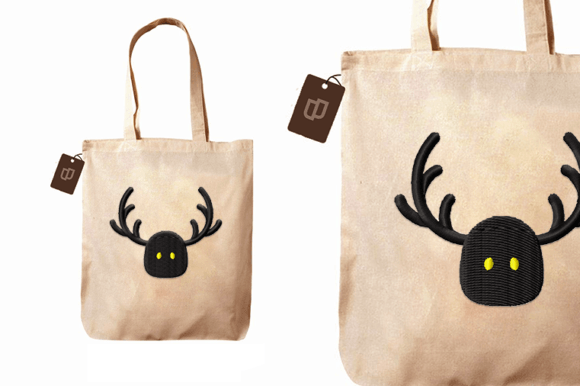
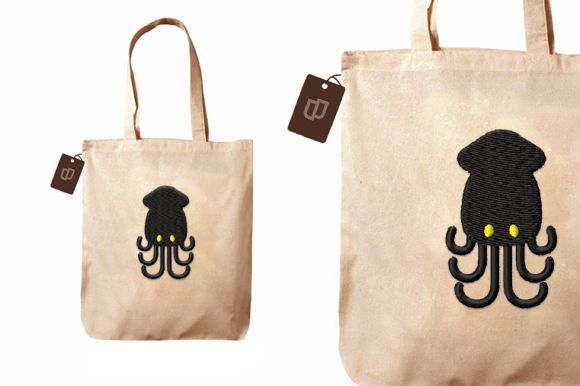
This is perhaps the most natural home for The Squid Silhouette. Canvas is a stable, forgiving fabric that holds thread well. When placed centrally on a tote bag, the silhouette acts as a graphic anchor. Because the design is minimal, it does not compete with other text or branding elements. If you are creating a tote bag design for a craft fair, pairing this dark silhouette against a light beige canvas with a single contrasting thread color (like navy or coral) creates a striking, modern aesthetic. It suggests a brand that values art over mass production.
Sweatshirt Embroidery
Moving to knit fabrics introduces complexity. Sweatshirts require careful stabilizer usage to prevent puckering. The clean lines of the squid mean that any slight distortion in the fabric will be immediately visible. However, if executed correctly, the result is incredibly premium. A centered chest placement of The Squid Silhouette on a charcoal grey hoodie looks understated yet expensive. It avoids the "busy" look that can plague complex designs on bulky fabrics. For custom apparel, this design offers a subtle nod to nature that appeals to a broad demographic, from surfers to librarians.
Baby Embroidery and Nursery Decor
There is a surprising softness to this silhouette when scaled down. On a baby embroidery project, such as a muslin blanket or a hooded towel, the gentle curves feel soothing rather than predatory. The lack of sharp angles makes it visually safe for infants. Furthermore, because it is a silhouette, it works beautifully in monochrome threads, which is often preferred for gender-neutral nursery themes. It transforms a standard handmade product into a keepsake-quality item.
Technical Execution and Stitch Considerations
While the visual appeal is high, the technical execution requires attention to detail. As an experienced reviewer, I must highlight where this design needs care during production.
- Stitch Density: Minimalist designs often rely on a balance of fill stitch and satin stitch borders. You must ensure the density is appropriate for the fabric weight. Too dense, and the squid will look stiff and plastic-like; too sparse, and the underlying fabric will show through, ruining the silhouette effect.
- Thread Colors: Contrast is your best friend here. A black squid on black fabric is invisible; a white squid on white fabric is equally futile. Test your thread colors rigorously. Metallic threads can add a luxurious touch to the tentacles, mimicking the iridescence of real cephalopods, but they require slower stitching speeds.
- Hoop Size: Ensure the hoop size accommodates the full width of the spread tentacles. Cropping the design awkwardly can break the flow of the shape. Always check the bounding box before hooping.
If you are planning to use this as an applique design, the clean edges make it an excellent candidate for applique techniques, where a base fabric is cut out and then stitched down. This adds texture and dimension, elevating the simple icon into a tactile experience.
Where to Use It Carefully
No design is universal, and The Squid Silhouette has limitations. Avoid placing this on highly textured fabrics like heavy bouclé or loose-weave linen unless you are prepared for the thread to sink into the weave, losing definition. Similarly, stretchy knits like spandex blends require strong tear-away or cut-away stabilizers to maintain the crispness of the outline.
Be cautious with tiny lettering or intricate details adjacent to this design. The simplicity of the squid works best when it has breathing room. Cluttering the surrounding area with dense text or busy patterns dilutes the impact of the central motif. Additionally, for products that need frequent washing, such as kitchen towels or aprons, ensure the design is anchored properly to prevent fraying at the tips of the tentacles.
Final Verdict for Designers and Sellers
The Squid Silhouette is a triumph of restraint. It proves that you do not need thousands of stitches to create a memorable image. For the craft business owner, this design offers high versatility with low risk. It fits seamlessly into seasonal collections—think "Summer Sale" tees or "Cozy Autumn" blankets—and pairs effortlessly with typography.
Before committing to a large production run, I strongly advise testing the design on scrap fabric first. Inspect the corners of the tentacles for any thread breaks or clumping. Run it through a black-and-white mockup to ensure the contrast holds up. Confirm whether the digital embroidery file includes the necessary licensing for commercial use if you intend to sell the finished items.
Ultimately, The Squid Silhouette is more than just an embroidery file; it is a design asset that brings a sense of calm sophistication to any project. Whether you are decorating a cap, personalizing a gift, or building a brand identity for a boutique, this design delivers professional results with elegant simplicity. It is a tool that respects both the maker’s time and the customer’s eye.